RETURN
><

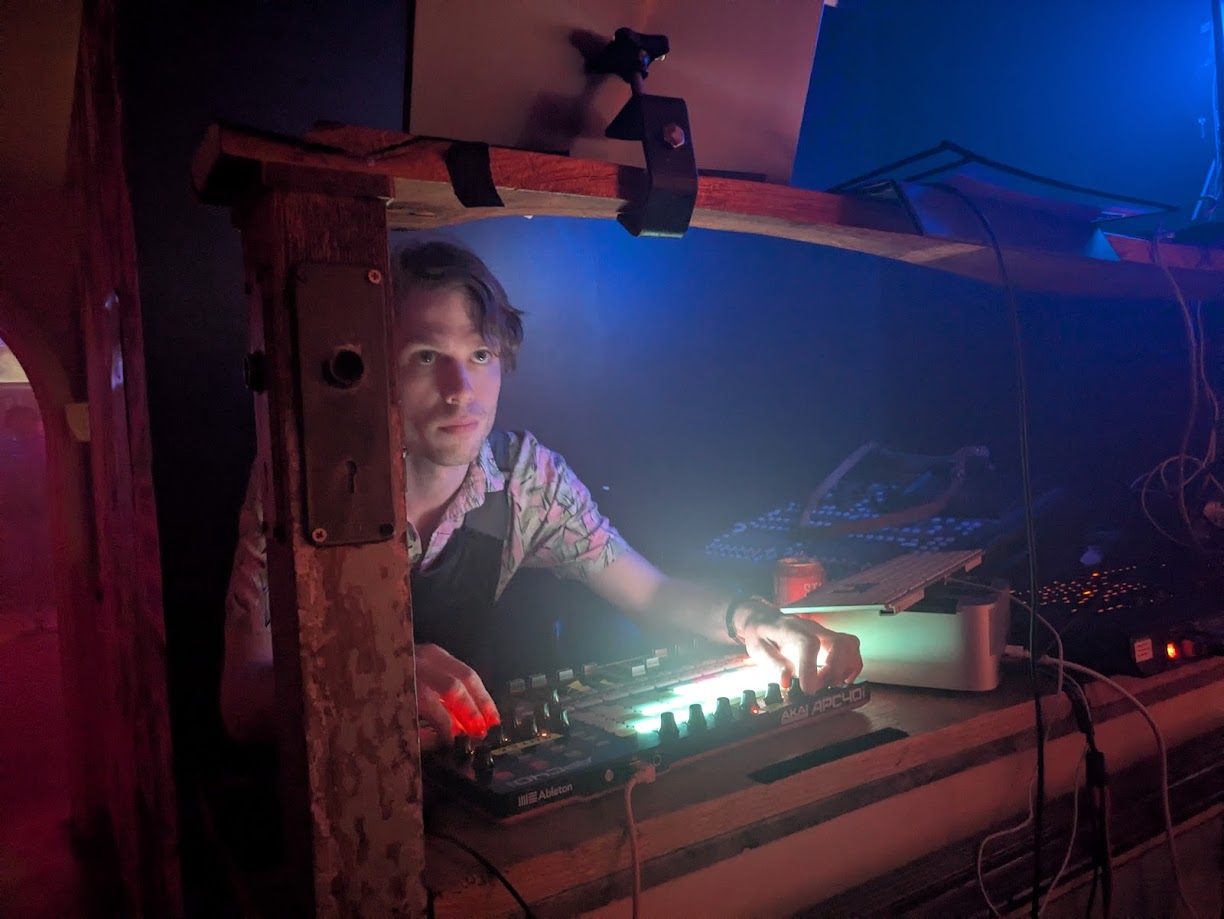
I'm comfortably in my zone with end-to-end design, assembly, and finishing of physical prototypes using 3D printing, CAD/CAM (Plasticity/Fusion 360/3-axis CNC milling), soldering, sewing, paint detailing, parts selection/sourcing, and general hardware skills. (See the Electronics Prototyping section for function demos.) Seen here is a custom lighting controller made from vintage broadcast equipment parts, a BUD Industries enclosure, and multiple custom 3D printed, milled, and painted/varnished parts.
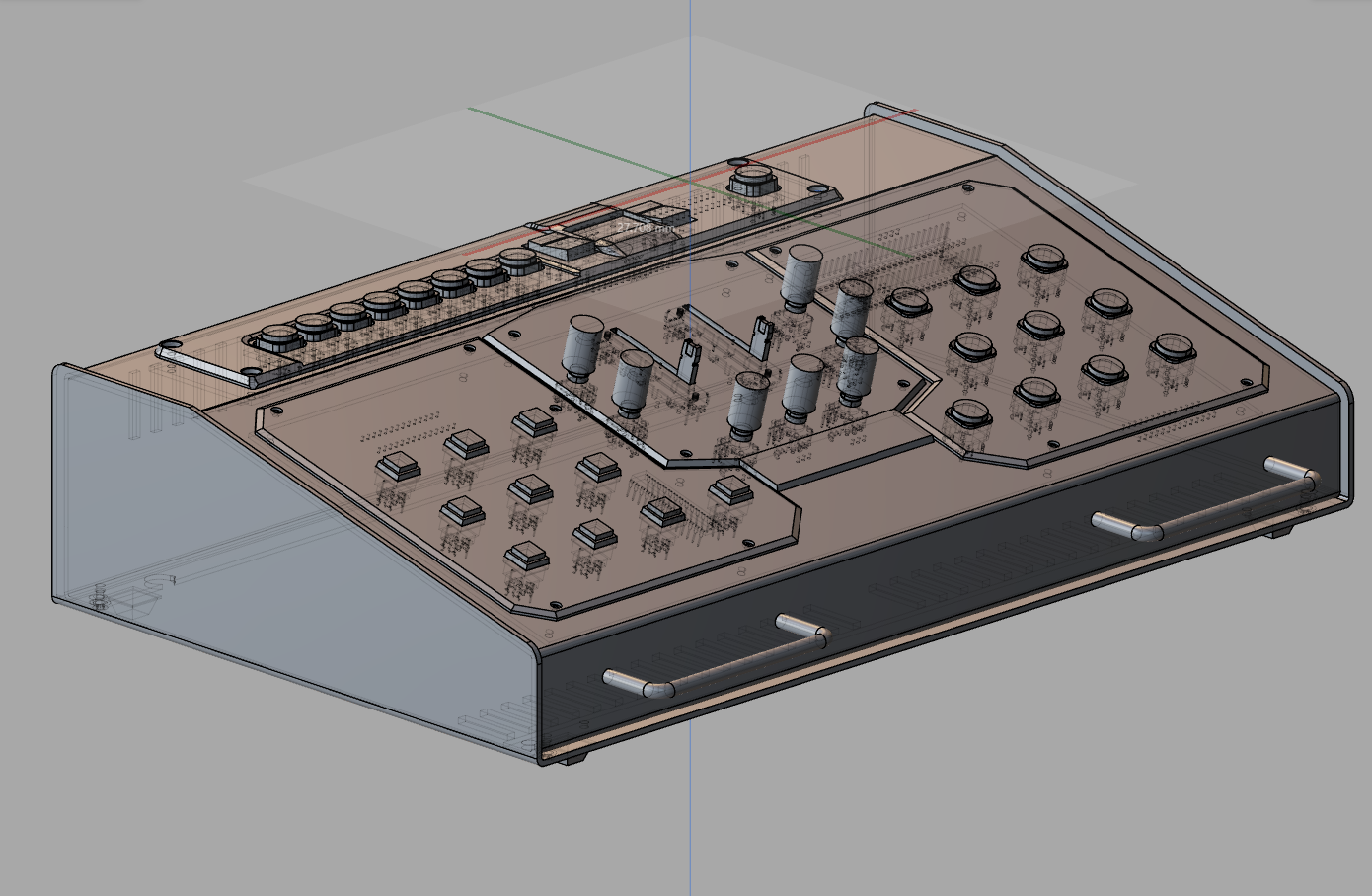
A CAD model of the MIDI controller that you can see demonstrated in the Electronic Prototyping section.
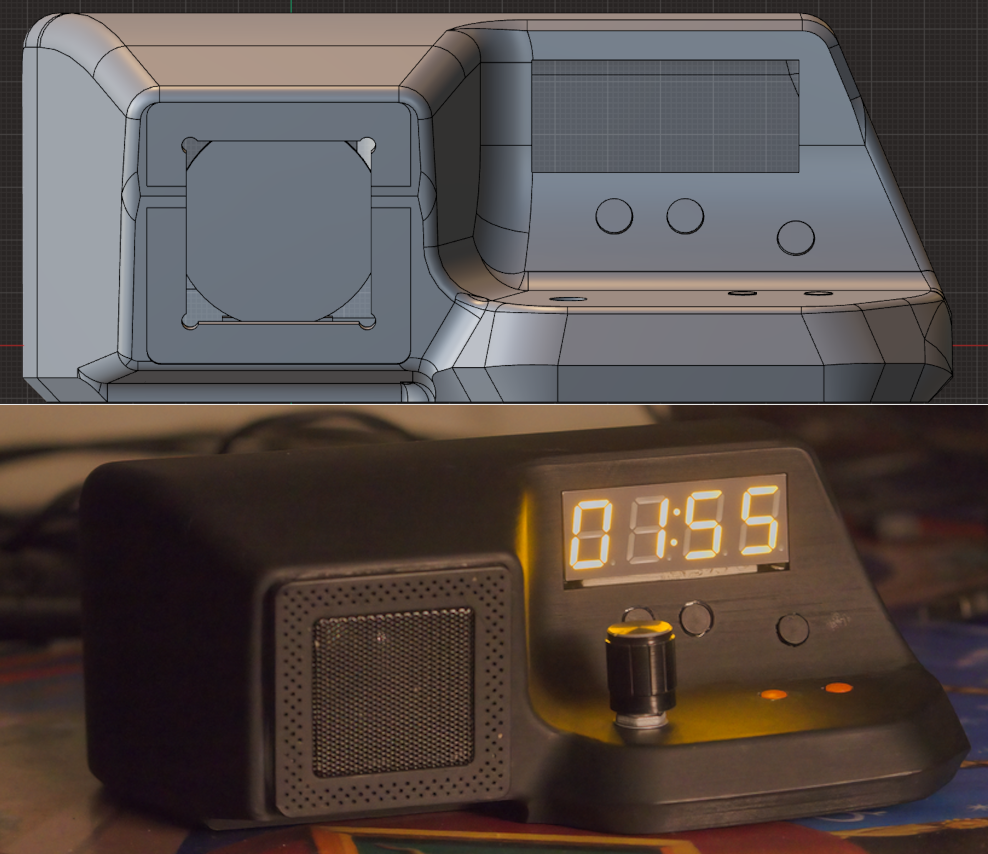
An alarm clock I made for a friend with a 3D printed enclosure that I designed. Shown here in both the design phase and in the final form.
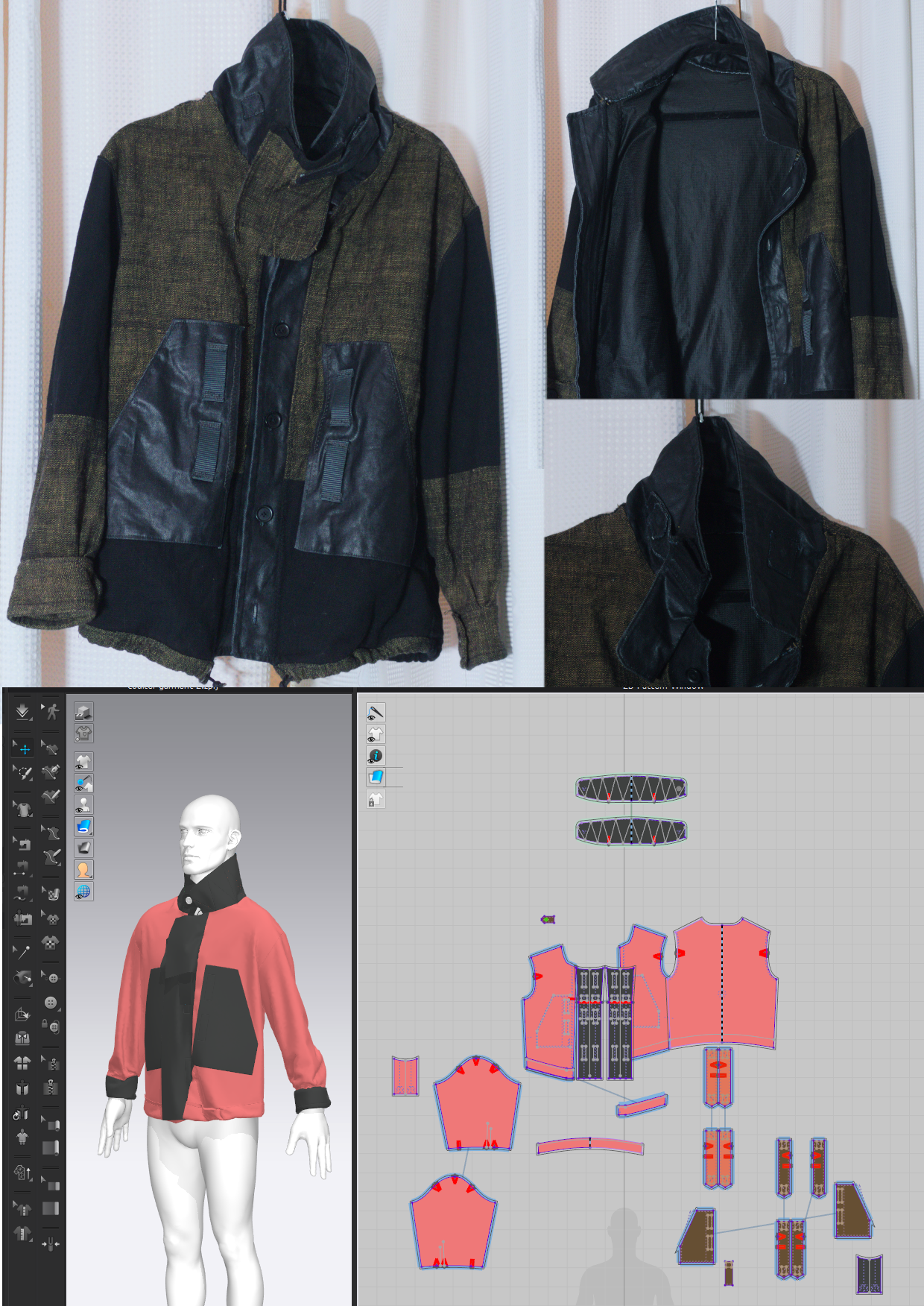
A light jacket that I  made seen above fully constructed, and below in the textile simulation and pattern making software Clo3D.
RETURN
><

I have 5+ years of experience prototyping electronic devices from EDA schematic capture/PCB layouts (mainly in KiCad), to firmware development in the Arduino IDE and Circuitpython, to configuring and scripting Linux single-board computers for fully computerized discrete devices.

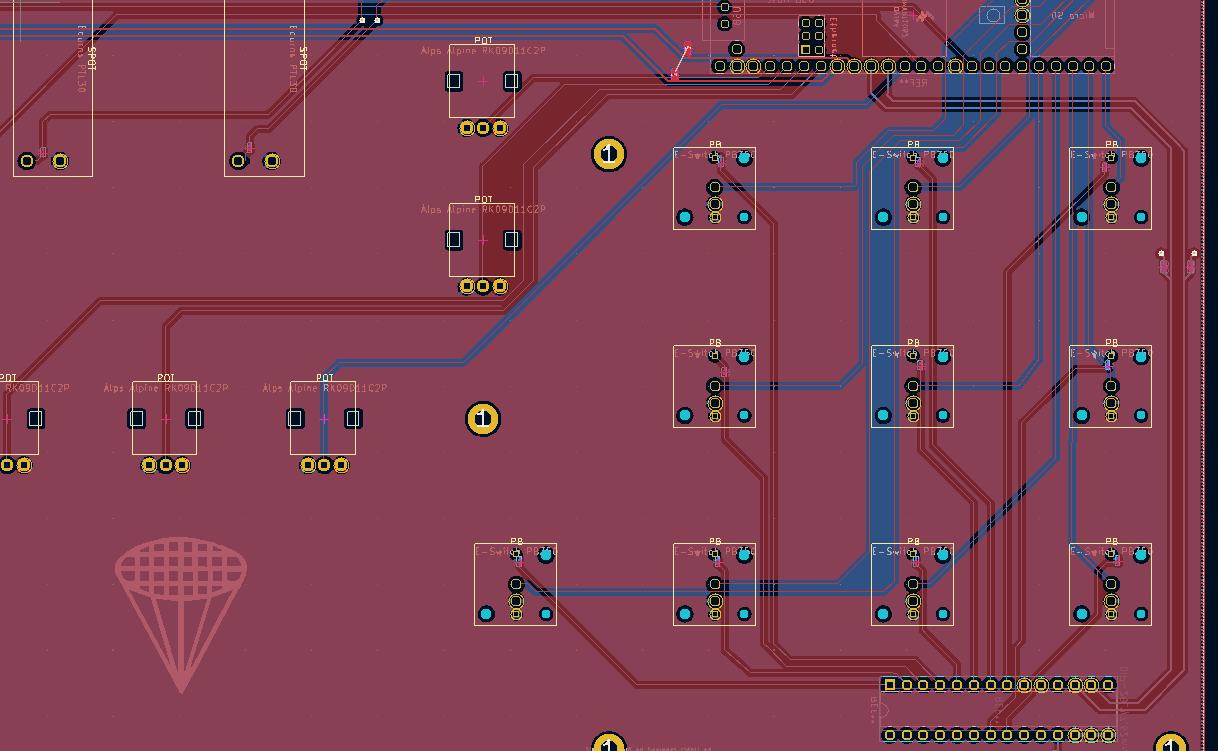
A USB MIDI controller for event lighting with paginated channel sets, fully illuminated controls, and with latching, momentary, slider/knob, and 8-position XOR/ganged latching inputs.

A device I made to better track my hours at work, and to experiment with RFID chips/readers. It uses an NFC keycard (can support multiple unique user IDs), a precision RTC module, an SD card, and an ESP32 to log my time in/out on a JSON file that I can access securely through a local wifi connection at the end of the pay period to submit my hours.

I wanted a vibey, loud, and visible alarm clock that could store and print reminders at any future date/time, and I wanted to get and use some Nixie tubes before the new-old stock dries up. This does that, has an optional clap-to-wake sleep mode, and can also be used as a virtual dice roller.

It's a clock, a worklight, a bluetooth or 3.5mm stereo speaker, and a weather station (it could be configured to fetch/display data from any number of public APIs). The idea as with many of these isn't streamlined functionalism but a fun combination of vibes and marginal utility.

A kind of conceptually open practice project that grew as it went. I ended up deciding to use a 6" color CRT display, a Raspberry Pi, and a preposterous number of sensors to make a scanner unit with simultaneous display. Includes a LWIR (thermal) camera, a LiDar distance sensor, two light meters, a UV meter, a thermometer, a barometer, a hygrometer, a Geiger counter, and a microelectromechanical (aka MEMS) gas sensor.

I am well aware that I could have a more capable version of this in my pocket using Meshtastic, but as with the last device, the clunky analog nature was part of the idea. This is a linked set of encrypted wireless (LoRA 915MHz) text terminals. Not a walkie-talkie, but a sitty-typey.

A limited but very effective technique in which assets are rendered for when the position of a spectator, a projector, and a surface can be precisely planned for (say, a scene that can only be watched from a specific window) in order to create the optical illusion of fully 3D objects in space.

RETURN
><

I have over 4 and a half years of experience working professionally on the development, installation, and maintanence of live-rendered, immersive/interactive exhibits and events. I have fluency with Touchdesigner, the use of industry lighting protocols (ArtNet, SACn, DMX), methods of LED and projection mapping, and integrating any manner of sensors and peripheral devices for interfacing and feedback.

Some experimentation with projecting onto one of my grandmother's lovely oil paintings, with various layers tailored to the depicted flowers.

This CRT TV array was one of the first assignments I took on at Klip, which was to map them as a unified display with a series of Raspberry Pi 2Bs using PiWall and to set them up for live playback using Touchdesigner and a local RTSP stream.

One of my early exploratory projects with projection mapping. This was a wadded up old blanket that I modelled with photogrammetry and projected back onto itself (physically, with an Epson Home Cinema 880) but with PBR textures and live noise morphing applied through Touchdesigner.

A fun little proof of concept with a projector and the data from a coaxial Kinect Azure depth camera. A person in frame is detected and their outline is highlighted by a "scan".

While I'm not enthusiastic about LLMs, this was an idea that tickled me too much to ignore. This is a Big Mouth Billy Bass connected to ChatGPT wholly through speech recognition and text-to-speech.

Some implementations of addressable LEDs, ArtNet pixel mapping, a projector, a joystick (that I built), and touchdesigner to enhance the immersion and atmosphere of a pen & paper RPG I was running.

A limited but very effective technique in which assets are rendered for when the position of a spectator, a projector, and a surface can be precisely planned for (say, a scene that can only be watched from a specific window) in order to create the optical illusion of fully 3D objects in space.

RETURN
><

I'm fluent with 3D graphics from modelling (Blender, Plasticity, ZBrush), unwrapping, and shading/texturing assets (Substance Designer/Painter), to lighting, animating, rendering, and compositing scenes for video or visualization. I'm experienced  primarily with hard-surface models, but I'm also conversant with organic, garment, photogrammetry, and environment workflows (Clo3D, Speedtree, Gaea, World Machine, Agisoft Metashape, etc.). These are mostly scifi concept art, because it's what I like to do and these are personal projects, but I'm happy to speak other visual languages if a conversation is struck.

Some type of blind, cave-dwelling alien creature.

A 'large lifeform detector', inspired by the motion tracker from the movie Alien(1979).

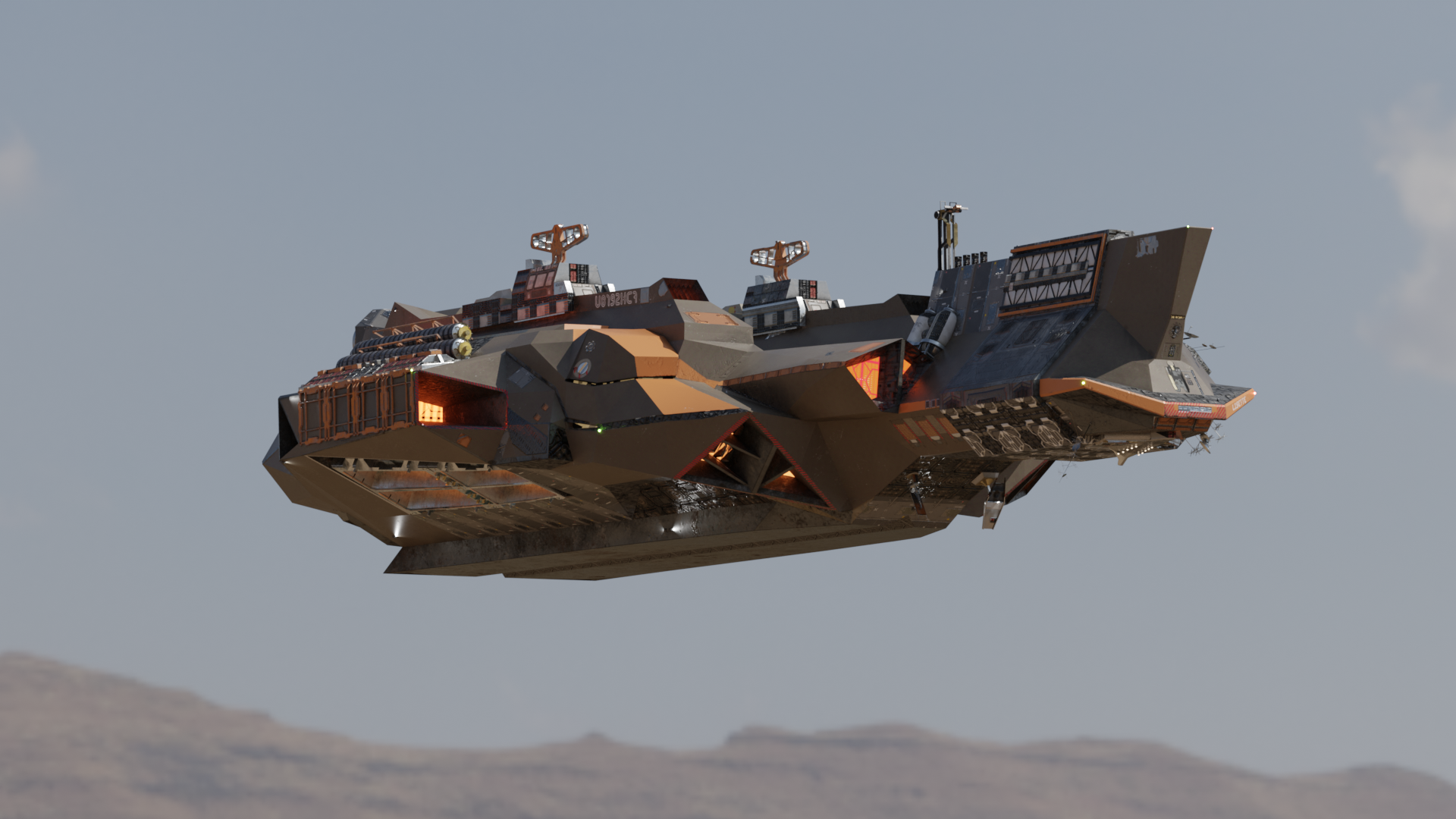
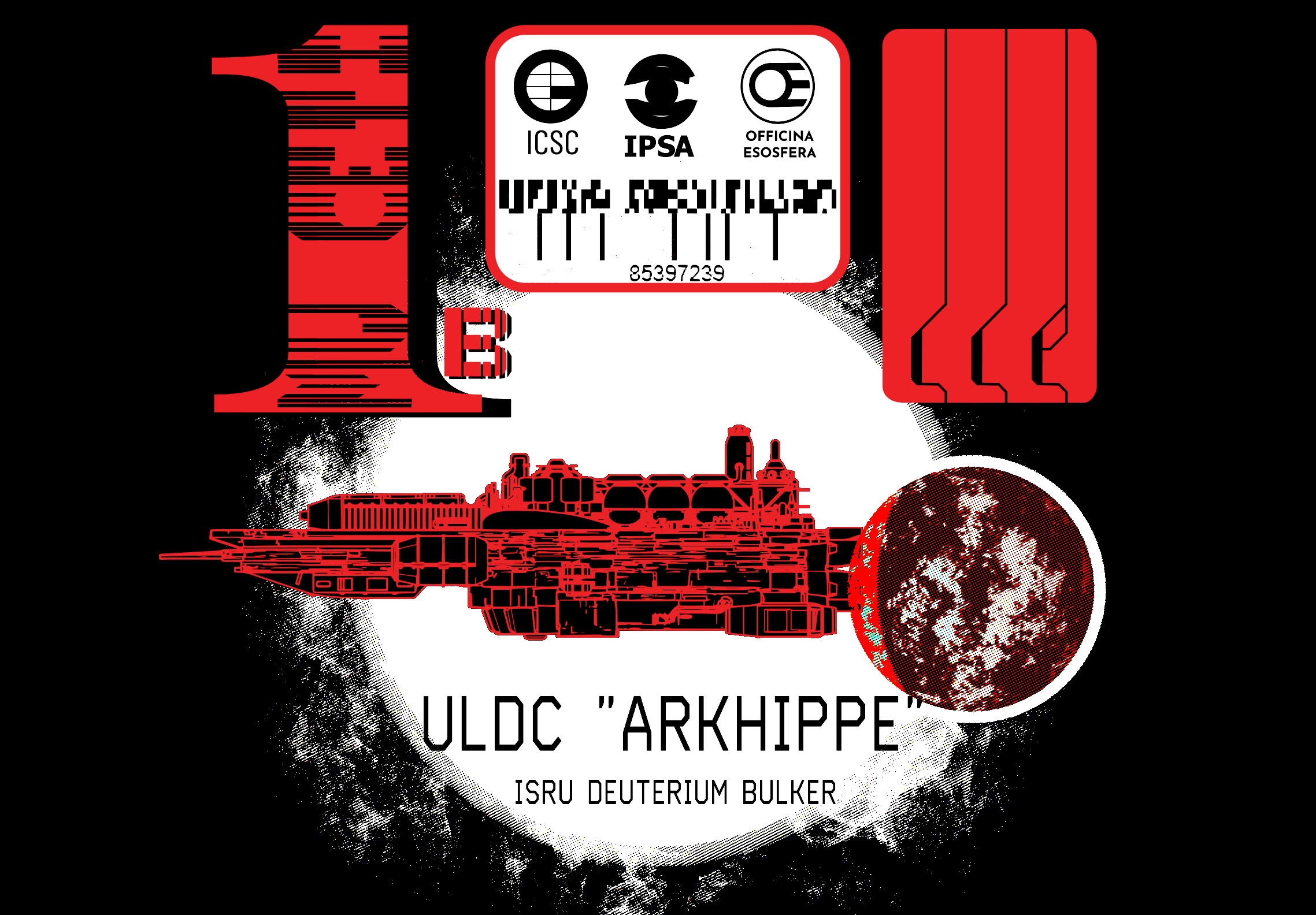
A spacefaring container ship.

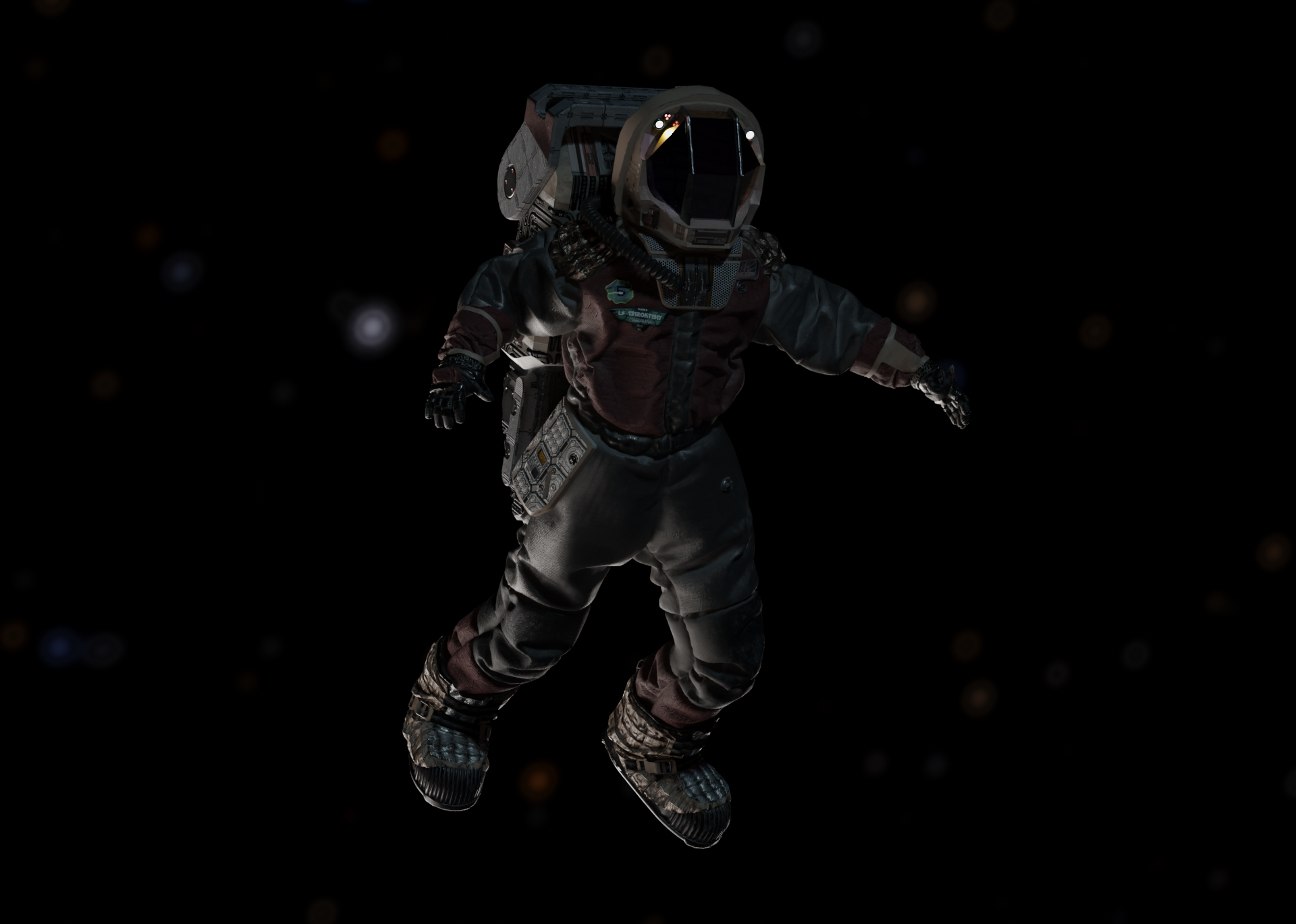
An Extra-Vehicular Activity spacesuit.

A scifi weapon concept for a pen and paper RPG setting under development. Animating the model was just for fun/practice. What if some bleak future year required astronauts on spacewalks to carry a sidearm? How would the design need to specialize for bulky gloves, long sightlines, and a total lack of convective cooling? What if it was also French?

Over the years I've done a lot of animating in Blender, and yet due to hardware limitations, and time/patience limitations, I rarely rendered anything longer than the default 250 frames (between 4 and 10 seconds long). Instead of a million of those, here is a tonally consistent collection mined from the same project.

RETURN
><

I've picked up a diverse set of proficiencies with 2D imagery from static raster and vector graphics (Photoshop, Illustrator) to video editing, motion graphics, and VFX compositing (After Effects, DaVinci Resolve, SynthEyes/Mocha). As a bonus, these slides also have some of the songs I've composed, because I ended up making video content to accompany them.

While the design of the vehicle belongs on the previous slide deck, this is a demo of my compositing into real footage using SynthEyes and Blender.

A music video I made from an original song I wrote, made with archival footage, touchdesigner, and Adobe After Effects.

Feedback processed visuals made in Touchdesigner to accompany a short/unfinished Piero Piccioni-inspired orchestral scoring track I made.

More original music and touchdesigner visual accompaniment, though this was a fun TD build in which the visuals were generated directly from MIDI cues passed in from playback in Ableton Live.

Here is a short sampler of some lofi motion graphics.

This one of the earliest videos I made in After Effects when learning VFX back in 2021. That is me, peaking in coolness, but just starting my way up Skills Mountain.

Skills & QualIfICAtionS

Since October of 2021 I've worked at Klip Collective, where I started as an intern and studio assistant, and have worked my way up to acting as the studio's in-house technologist. Before that I had just finished my Associate's degree in network technology and was studying for a Cisco certification in network engineering. Before that I had finished in Associate's in law. Before (and for a time, after) that degree, I was a line cook. The best part about finding your vocation this way is that you only have to do it once.

digital fabrication

Electronics Prototyping

Immersive & Interactive Systems

3d concepting
& Design

2d COMPOSITING
& Editing

CONSIDER: I once drew this startling likeness of a mudskipper entirely from memory. They really do look like this (look it up!)
NOW: Imagine what I could do for you or your company.
HOME PAGEodds & EnDSINFO & AVAILABILITY